

 All TVs
 All Audio
 All Refrigerators
 All Washing Machines
 All Air purifies
10 Mistakes That Can Reduce Your Washing Machine’s Lifespan

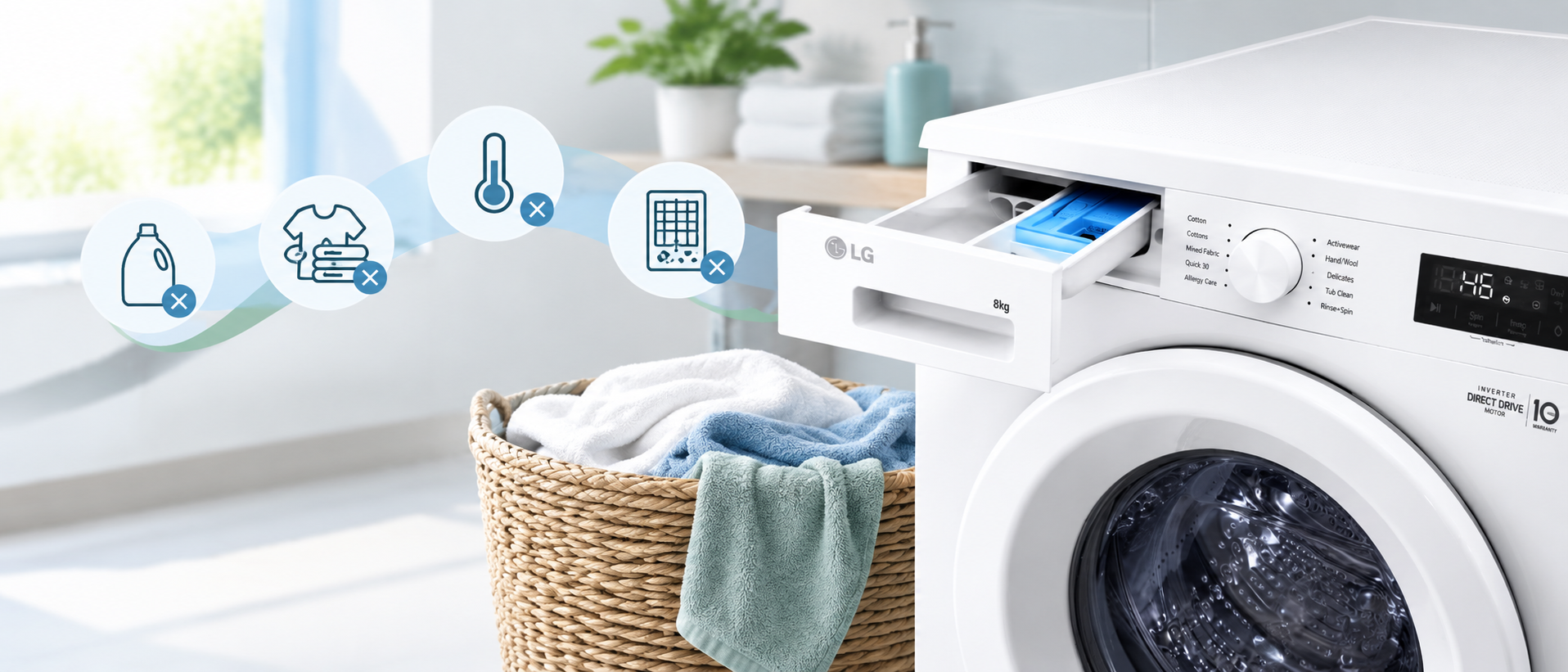
While it is super easy to use the washing machine, you may unknowingly make some mistakes that are negatively affecting its performance or quietly shortening its lifespan. Read our guide about the common washing machine mistakes and how to avoid them, helping you keep the appliance in good condition for years to come and your clothes perfectly clean after every wash.
Most Common Washing Machine Mistakes & How to Avoid Them
Before you rush to run the next cycle, be sure to learn the best practices for using your washing machine and how to avoid common mistakes. This basic yet important information will help you get the most out of your appliance while also prolonging its lifespan.
Here are ten common mistakes that reduce your washing machine lifespan and how to avoid them:
Overloading the Washing Machine
You may get carried away with loading your machine, adding in more clothes until the drum is packed full. You may think that this is a great move, reducing the number of cycles you need to get all the laundry done. However, this is one of the common washing machine mistakes to avoid. How so?
By overloading the machine, you make it harder for water and detergent to circulate through the clothes. As a result, they can’t reach all items properly, so some clothes remain dirty while others will have detergent residue on them by the time the cycle ends.
Additionally, an overloaded washing machine works harder to wash and rinse due to the extra weight, which strains the motor, drum, and other components, negatively impacting its longevity. Finally, clothes come out wrinkled because they don’t have enough space to move freely and separate during the wash and spin process.
To avoid this washing machine mistake, leave some space between the laundry and the top of the drum when using a front-loading washing machine. Regardless of the type of machine you have, it is important to leave enough room in the drum for the clothes to move freely.
Using the Wrong Amount of Detergent
This is another key washing machine mistake to avoid, and it goes both ways: adding too much detergent and adding too little. But how can both be an issue in their own right? Adding too much detergent will not make your clothes cleaner, as you may think, but it can instead cause a mess. When there’s too much detergent, the washing machine may not be able to fully rinse it away, leading to residue. So when you open the machine, you’ll find detergent on your clothes, and they are nowhere near ready to wear.
The extreme opposite is not quite right either. When you add too little detergent, the appliance will not be able to clean your clothes thoroughly, so you might need to run another cycle. If you don’t use enough detergent each time you wash your clothes, they will look dull and feel slightly soiled over time because the dirt, body oils, and sweat are not being efficiently removed.
To avoid this, be sure to add just the right amount of detergent by following the instructions on the detergent packaging. You may need to adjust it slightly depending on how soiled the clothes are and how big or small the load is.
Not Cleaning the Detergent Drawer
Cleaning the detergent drawer is easily overlooked, because you are more likely to think about the drum, door gasket, or the machine’s outer surfaces when the topic of cleaning comes up. However, cleaning this drawer is just as important. But why? With continued use, detergent can leave residue in the drawer, making it harder for the detergent to reach the drum properly. An unclean drawer can also encourage mold growth, especially if it is damp.
The good news is that avoiding this mistake is quite easy! All you need to do is clean the drawer following these steps: Simply remove the drawer from its designated compartment if possible, and remove loose residue using a slightly damp cloth. Then, rinse it under warm, running water before wiping it dry with another cloth. If there’s stubborn residue, soak it in warm water before following the above steps. You can apply the same process even if the drawer cannot be removed; just try to open it to the furthest possible point to give you more room to work with.
Not Cleaning the Washing Machine Filter
Not cleaning the washing machine filter can significantly affect cleaning performance. But what does the filter do? Generally located in the drainage system, it catches larger debris and objects as the machine pumps out used water, preventing them from reaching the drain pump or hose. Simply put, it catches lint, hair, coins, tissues, and other objects.
But here’s the thing: If the filter keeps on catching these objects but is not cleaned, debris can build up and clog it, restricting the flow of used water. So, the machine may drain slowly or fail to drain properly, leaving water in the drum. As a result, the clothes may not come out completely clean or may be wetter than usual. You may also notice an unpleasant smell coming from the appliance.
As the filter gets blocked, the machine works harder to wash your clothes and drain the dirty water, putting additional pressure on the drain pump and other components, potentially reducing your washing machine lifespan. So here’s what to do to clean the filter: Switch off and unplug the washing machine, then place a towel or shallow container underneath the filter to catch any remaining water. Remove the filter according to the manufacturer’s instructions, clear away any debris, and rinse it under running water before putting it back securely.
Keeping the Washing Machine Closed after a Cycle is Done
Keeping the door closed after a cycle ends may seem completely insignificant, but it is actually one of the common washing machine usage mistakes to avoid. Wondering why the fuss?
When the door stays closed, all the moisture gets trapped inside with no way to get out, creating the perfect environment for mold growth and unpleasant odors—both of which you’d want to prevent. Over time, the door gasket can also get damp and grimy because of the moisture, making the entire situation worse if there’s already detergent residue there.
While you may be occupied with other chores, be in a rush to leave the house, or simply want to rest and forget about laundry altogether, it is crucial to open the machine’s door as soon as the cycle is done. You don’t have to open it fully either; keeping it slightly ajar will do the trick.
Leaving Wet Clothes Inside the Machine
Leaving laundry inside the washing machine is tempting and easy, because the clothes just sit in their place while you go on about your day doing other things. This, however, is a common washing machine mistake and not a smart hack, as some might think.
How so? When wet clothes stay inside the drum for a long time, they remain damp in a closed and warm environment that encourages bacteria and mold growth in the drum itself and on the door gasket. And once you actually remove your clothes, they might be extremely wrinkled and give a bad, musty smell. So you may need to wash them all over again. The fix is simple—remove your clothes as soon as the cycle is done!
Using the Wrong Wash Cycles
Picking washing cycles at random is not the best idea, because using an unsuitable option can damage your clothes. Here are a few scenarios: Using a gentle cycle on heavily soiled clothes will only result in dirty items and you running another cycle.
Going with an intense cycle to wash delicate clothes will cause fabric and color damage. Another thing to consider is energy efficiency; selecting a cycle that uses hotter water or that lasts longer than needed will only use more resources and spike up your water and electricity bills.
This mistake can also reduce the washing machine lifespan. Here is how: If you happen to use intense washing cycles each time you do laundry, that will put additional strain on the appliance, which can contribute to faster wear and tear over time.
Wondering how to approach this correctly? The easiest way to determine the right cycle is by checking the care labels on your clothes. Generally speaking, delicate fabrics need gentle cycles, everyday cotton clothes go well with a cotton cycle, and quick cycles are sufficient for lightly soiled items.
It is also best to run an economic or eco-friendly cycle if the load is small, helping you reduce energy consumption. When in doubt, check the washing machine manual for more details and recommendations.
Ignoring Unusual Noise and Vibrations
Does your washing machine make weird noises? Does it suddenly begin to vibrate? Then, these issues should be addressed promptly, as they could indicate a variety of things: mechanical problems that are best handled by professionals; an object stuck somewhere that is causing shrieking sounds; an unbalanced load that leads to banging noises or makes the machine shake; or improper installation that causes noise and allows the washing machine to shake, vibrate, and walk across the room.
Ignoring these noises and vibrations is a common washing machine mistake that you must avoid to keep the appliance in good condition and your clothes clean after every cycle. Here are the practical steps you should take: Stop the cycle and check whether there’s an object stuck in the drum. Remove it, then resume the cycle.
If there are no objects inside other than the clothes, check whether the washing machine is standing level and stable on the floor. If it isn’t, adjust its feet according to the manufacturer’s instructions. If the noise and vibrations persist, then it is best to contact a qualified technician to make the necessary checks and repairs. The machine may also need to be reinstalled properly by professionals if the initial installation was flawed.
Not Leveling the Washing Machine Properly
This one washing machine mistake can lead to many issues, like excessive vibration, noise, movement, or even “walking” across the floor. This can potentially cause damage to the machine’s surroundings in extreme cases. Other than that, it can also shorten the washing machine’s lifespan because of the additional strain that’s put on its components.
Resolving this issue (and preventing it) is quite simple; here’s what you should do: Turn off the machine and unplug it, then adjust its feet so that it sits level and firmly on the floor. To know for sure that it is level and skip the guessing game, get a spirit level and place it on top of the machine. If the bubble inside the level moves toward one direction, then the machine is tilted in that direction, and the feet need to be adjusted accordingly.
Overlooking Maintenance
The last—and maybe most crucial—washing machine usage mistake on our list is overlooking and ignoring maintenance. Regular checkups and maintenance are essential to keeping the appliance in good condition, especially in the long term. Not all issues announce themselves, and not all washing machine problems can be resolved at home, as they can sometimes require professional attention, especially when electrical components are involved or hard-to-reach areas need to be accessed.
FAQs about Common Washing Machine Usage Mistakes
Here are some of the most common questions and their answers:
How long should a washing machine last?
A washing machine can last for many years with proper use and maintenance, but its lifespan varies depending on the model, frequency of use, installation, and maintenance. For information about your specific machine, check the manufacturer’s specifications and warranty terms.
How do I know which washing machine capacity is best for me?
The right capacity depends on many factors, including the size of your household, how frequently you do laundry, and the kind of items you typically wash. Bigger capacities are more suitable for bigger families, frequent washing, and washing bulky items. The opposite is also true.
What detergent should I use for my washing machine?
Both liquid and powder detergents work fine as long as you follow the detergent’s instructions on how to use them. Also, take into consideration that some detergents are more suitable for front-load washing than others, and the same applies to top-load models.
Looking to upgrade your current washing machine or buy one for the first time? LG washing machines are your best pick either way. They are designed to last you years to come, take care of your family’s clothes, and keep your favorite outfits in perfect condition by integrating the most advanced techniques and offering you a variety of washing programs.
Available from New Vision in Jordan, LG washing machines are just what you need to make laundry day easier. Shop now and choose the one most suitable for your needs.
Read now: Common Washing Machine Issues and How to Fix Them
Explore further: LG Washing Machine Features: Why Is It One of the Best?
More details: How to Clean a Washing Machine: Easy Steps for Better Efficiency

