

 All TVs
 All Audio
 All Refrigerators
 All Washing Machines
 All Air purifies
How to Keep Your Refrigerator Efficient in Summer: 8 Essential Tips

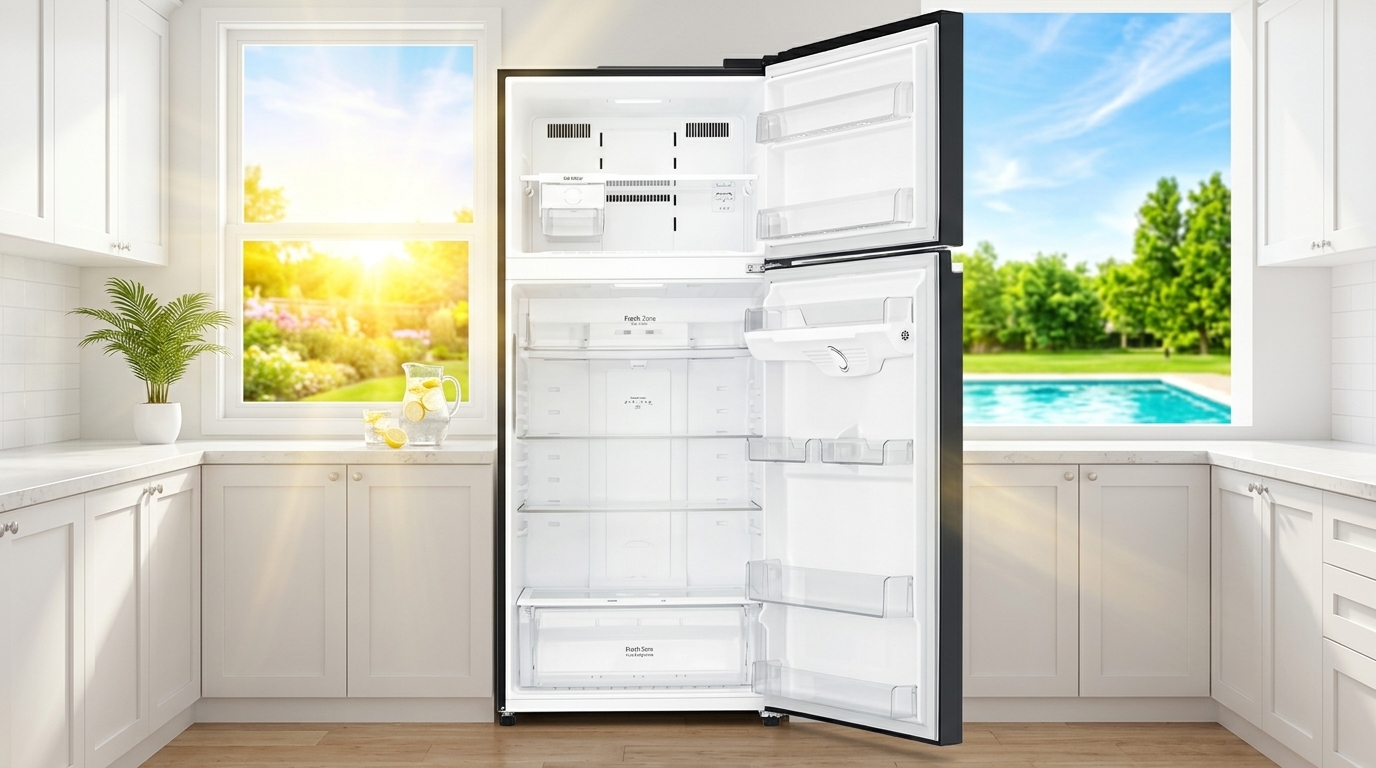
The way you take care of your home should adapt to the changing seasons, as each one generally comes with different needs when it comes to home appliances, cleaning routines, and other areas. For one, you should learn how to keep your refrigerator efficient during summer to maintain excellent cooling performance without sending your electricity bills through the roof.
This outcome is entirely achievable through a few simple practices that are covered in this guide. Continue reading to discover our key tips in maintaining refrigerator efficiency in summer, how to lower its energy consumption, and how to store food properly.
How Does the Summer Affect Refrigerator Efficiency?
Before learning how to maintain refrigerator efficiency during summer, you should know exactly how high outdoor temperatures can affect its performance. When the surrounding air is hot, the compressor has to work harder and longer to remove heat from the fridge and release it into the room.
Add frequent door opening, which lets cool air escape and warm air in, and the cooling system has even more work to do. The result? Longer compressor cycles and higher electricity consumption, which is something you’ll want to know before your next electricity bill catches you off guard!
So if that’s how the fridge is impacted during summer, how do you adapt to these specific needs?
How to Maintain Refrigerator Efficiency? 8 Easy Tips
Learning how to maintain refrigerator efficiency can make a world of difference in how smoothly and efficiently your fridge works despite the outside raging heat. Ready to implement the best practices? Follow these tips to boost refrigerator efficiency in summer:
1- Place the fridge where there is good ventilation
Good ventilation is essential for maintaining refrigerator efficiency during summer. Here’s how: The fridge absorbs heat from its interior compartment, where the food is stored. Then, it is transferred to the condenser coils, which are typically located at the back or bottom of the appliance, where they release the heat into the room.
But here’s the catch: If the refrigerator is placed in a tight area or too close to cabinets or walls, heat accumulates around the coils and makes it harder for the appliance to maintain the desired temperature. Therefore, provide enough space around the fridge during summer to allow heat to dissipate properly and give it room to breathe.
2- Avoid opening the door frequently and for long
To maintain refrigerator efficiency in summer, you have to avoid—or at least minimize—opening the refrigerator door frequently or leaving it open for too long. If you have the habit of leaving it open as you roam around the kitchen or run to the nearby room, then summer is the best time to start breaking that habit. But why is it so important to do that?
By opening the door frequently or for too long, you let the cool air escape the fridge and invite warm air inside, forcing the compressor to work hard to restore the desired internal temperature. Not only does this make the inside temperature rise quickly, it also puts additional strain on the cooling system and increases the overall refrigerator energy consumption.
3- Don’t put hot food inside the fridge
Putting hot food inside the fridge only gives it a new source of heat to deal with. Picture this: the fridge is working fine and the temperature is cool, nice, and steady, until you place a plate of hot food inside. This one plate, while it may seem harmless, can quickly raise the temperature inside, adding to the cooling workload and forcing the compressor to work harder to bring the temperature back down.
It’s almost like taking the fridge back to square one. So to maintain refrigerator efficiency in summer, avoid placing very hot food directly inside the fridge. Instead, let it cool for a short while before refrigerating it.
4- Don’t overcrowd the fridge
Putting too much food in the fridge is never a good idea, but this is especially important in summer, when efficient and consistent cooling is a must. So, how does this have anything to do with how to maintain refrigerator efficiency? When the fridge is overcrowded with food items, containers, and bags, the cool air cannot circulate properly.
As a result, some parts of the fridge may be colder than others, and the food placed in the warmer parts may not be preserved as well. The same can happen when items block the cooling vents. The solution here is simple: Do not overcrowd the fridge, and leave space for air to circulate so the cooling system can maintain the desired temperature without overworking.
5- Keep the cooling vents clean
The cooling vents, also known as air vents, are openings inside the fridge that distribute cool air throughout the appliance, maintaining consistent temperature and preventing some areas from being warmer than others. Their exact location differs across models, but they are typically located on the back wall of the fridge compartment.
If that’s how cooling vents work, how do you clean them?
Simply wipe these vents with a damp, clean cloth to get rid of dust, moisture, or food residue that can accumulate over time. If you happen to spill something over those vents, you should also clean the mess right away to avoid restricting the airflow and help sustain refrigerator efficiency in summer.
6- Double-check the door gasket
As part of learning how to keep your refrigerator efficient during summer, you have to make sure that the refrigerator is properly sealed when it’s closed and that it doesn’t let air escape. To do that, have a quick look at the door gasket. A damaged, loose, or dirty door gasket can prevent the door from sealing properly, so cool air escapes and the warm air enters. So make sure to clean it if it’s dirty or replace it if it’s cracked, torn, or loose.
If the gasket is not in good condition, then the fridge door is technically open all the time—which is not something you want!
7- Use energy-saving mode (if available)
Activate the energy-saving mode—if available—on your fridge, so it automatically alters how certain features work and reduces electricity consumption. This program doesn’t have a fixed name, as it can also be named as “eco mode” or “energy saver.”
And while there is not one standard mechanism for this option across all models and types, it generally adjusts the compressor’s operation to use less energy, turns some features off temporarily, and reduces overall cooling activity when the fridge is not actively used.
8- Ensure regular maintenance
Summer is the perfect time to ensure your fridge is working just fine. Simply get in touch with a professional technician to inspect the fridge and carry out the necessary checks, confirming that all components are functioning properly.
This way, you can help prevent unexpected issues and breakdowns—because dealing with heat waves is already enough! Regular maintenance and repairs are an essential part of how to maintain refrigerator efficiency in summer, so be sure to stay on top of them.
Do you own an LG smart refrigerator? Then, contact the New Vision Maintenance Center right away to get the support you need!
Now that you know how to keep your refrigerator efficient in summer, there are various practices that you can implement to specifically reduce its energy consumption.
How to Reduce Your Refrigerator Energy Consumption During Summer
While all the above tips about how to keep your refrigerator efficient help cut energy use, there are some additional tips that focus more directly on lowering refrigerator energy consumption, and they are as follows:
1) Check refrigerator temperature
Setting the proper temperature in summer is absolutely key for reducing refrigerator energy consumption. If the temperature is too high, then what’s the use? Not much! But if it is too low, you will just force the entire cooling system to work harder than necessary, wasting energy without providing much benefit. A setting around 4°C is generally recommended for the refrigerator compartment, while the freezer is typically kept at around -18°C.
Want to know how to set the proper temperature step-by-step?
Explore now: How to Set Your Refrigerator Temperature Correctly to Keep Food Fresh
2) Explore all smart energy features
Smart fridges offer various energy-related features that are designed to reduce electricity consumption in different ways. While these options vary across manufacturers, types, and models, it is important to check which features are available on your appliance and learn how to use them to minimize the refrigerator energy consumption.
Some of these can include energy-saving modes that use less electricity during cooling, energy monitoring features that track how much energy is being used, and smart cooling features that automatically adjust cooling based on usage patterns, among others.
3) Don’t put the fridge near energy sources
The kitchen is already hot during summer days, so be sure not to put the fridge near heat sources like the oven, stove, dishwasher, or other heat-generating appliances. Putting the fridge near those appliances makes it harder for the cooling system to maintain the desired temperature because the surrounding air is already hot, making it work even harder to keep the inside cool.
4) Use the refrigerator's vacation/holiday mode
Going away on vacation during summer? Your fridge may have a special program just for that! Since you will not be around to open it, the vacation or holiday mode is designed to enhance refrigerator energy efficiency during the time you’re gone.
When activated, the refrigerator reduces cooling activity in the refrigerator compartment since it won’t be used as often while keeping the freezer running normally so all frozen foods remain safely preserved. Check the user manual for the exact details.
5) Turn off the automatic ice maker
Some fridges come with an ice maker that automatically makes ice; water fills a tray or mold, where it freezes into cubes before being released into the ice bin. While this makes your summer cooler with ice readily available, it can also use additional electricity, which you may not want if you’re not a big fan of ice. To reduce refrigerator energy consumption, simply turn off the automatic ice maker and enjoy your cool drinks anyway!
6) Defrost the freezer
The freezer compartment of the refrigerator is also relevant! When neglected, it can raise the appliance’s energy consumption, which is not something that you want. So, what should you do? Check the freezer for frost. It forms when warm, humid air gets inside the freezer and condenses on its cold surfaces, creating a thin layer of ice. If the freezer does not have an automatic defrost system, this layer can gradually build up.
Excessive frost can interfere with heat transfer and make the freezer work harder and for longer to maintain the desired temperature, increasing energy use. So, be sure to remove excessive ice buildup when needed.
Now that you know how to enhance your refrigerator's energy efficiency in summer, you must know that the way you store your food also plays a significant role in the appliance's overall efficiency! More details below.
Tips for Storing Food in the Refrigerator During Summer
Storing your food properly is an important part of maintaining refrigerator efficiency in summer. So, here’s how you should go about it:
- Organize food in a way that makes it easier to find, so you don’t spend too much time looking for anything, while the door remains open.
- Try not to add lots of food items at once, so you don’t overwork the fridge.
- Learn the best spots for different foods based on your fridge type and design so you can get the best cooling performance.
- Let frozen food thaw in the refrigerator, as their cool temperature helps keep the overall inside temperature at the desired level.
- All food containers must be sealed properly to avoid spills, prevent moisture and frost, and help keep the inside temperature stable.
Below are further insights.
FAQs about Keeping Your Refrigerator Efficient During Summer
Here are some of the most commonly asked questions and their answers:
1. What’s the right way to clean my fridge?
To clean your fridge properly, begin by emptying it and removing the shelves and drawers. Wash those in warm water and soap and wipe the interior with a soft cloth and a mild cleaner—like diluted dish soap. Don’t forget to wipe the door gasket as well. Finally, wipe everything dry and put the shelves into place and the food back in the fridge.
2. Can I turn off my refrigerator when I go on vacation?
Yes, but only if you’ll be away for a short period of time. If not, it is best to use the vacation mode. In case it is not available, simply keep the fridge running as is or use an energy-saving mode. Be sure to check the user manual before making any changes.
3. How full should a refrigerator be?
It shouldn’t be overcrowded nor near empty either. A nice in-between keeps it comfortably full for best energy efficiency.
4. How far should a refrigerator be from the wall?
A refrigerator should have enough clearance from the wall to allow proper airflow and heat dissipation. The exact distance varies by model, so always follow the manufacturer’s recommended clearance in the user manual.
5. Where is the coldest part of the refrigerator?
The coldest part of the fridge depends on its design and type, but it is typically at the back of the refrigerator compartment near the cooling vents.
Enjoy a Cool Summer with LG’s Smart Refrigerators
Want to have a fridge that just gets it? New Vision, the only distributor of LG home appliances in Jordan, provides a wide range of smart fridges from LG—built for your comfort and convenience and with electricity bills in mind. These models and types integrate various features and techniques that keep them cool during hot weather to maintain food freshness and quality.
Discover LG’s smart refrigerators, shop for the one that fits your needs best, and enjoy a cool summer, worry-free!
Explore now: How to Choose the Best Refrigerator: Key Features & Buying Tips
Learn more: Home Refrigerator Repair: Easy and Quick Steps
Further reading: Refrigerator Not Cooling? Here’s Why—and How to Fix It

